
GRF Progress Review 2025 において、日本における難民包摂の実践を共有 Ι Sharing Japan’s Refugee Inclusion Practices at the GRF Progress Review 2025
※ The English version follows below.
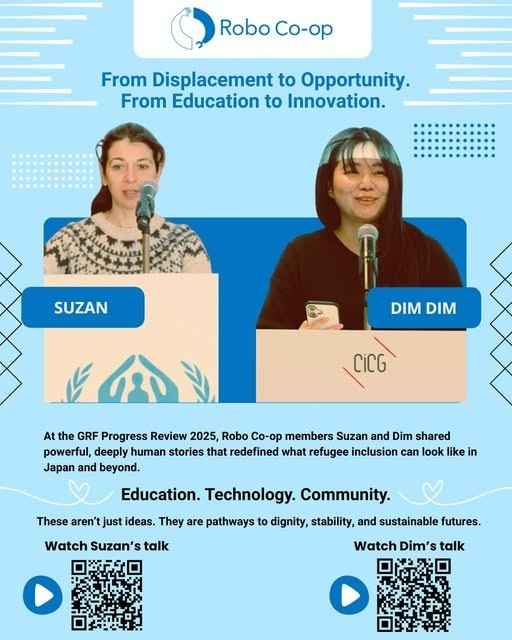
GRF Progress Review 2025 にて、Robo Co-op のメンバーである Suzan とDim が、難民の強制移動、教育、そして日本におけるコミュニティ主導型の社会統合について、力強い示唆を共有しました。教育・テクノロジー・協同組合モデルを組み合わせることで、難民包摂に向けた持続可能な道筋をどのように創出できるのかが示されました。
◆セッションタイトル: 難民ユースのためのスキル基盤型パスウェイ:日本および国際的事例からの学び
本セッションで Suzan は、シリアでの自身の経験と、難民的背景を持つ学生として日本に渡った道のりを共有しました。教育が、彼女にとって保護・安定・長期的な社会統合への最初の入り口であったことを振り返っています。
続いて、補完的パスウェイ(Complementary Pathways)に関する自身の研究および発表論文を紹介し、特に教育を基盤としたパスウェイに焦点を当て、これらが従来の第三国定住と並行して機能する、構造化された権利に基づく代替手段であることを説明しました。
日本の文脈においては、Pathways Japan などの取り組みを通じた教育アクセスの実装について分析し、奨学金、学業支援、教育機関との連携を通じて、難民的背景を持つ学生を支援する同プログラムの役割を紹介しました。
最後に、教育から雇用へと議論を広げ、スキル開発、デジタル研修、リモートワーク、協同組合モデルを通じて就労機会へのアクセスを促進するデジタルプラットフォームとして Robo Co-op を紹介しました。教育と雇用のパスウェイを組み合わせることで、難民にとって持続可能で尊厳ある解決策が提供できることを示しました。
Suzanの発表はこちらから視聴できます
◆セッションタイトル: 「強制移動からイノベーションへ:アジア太平洋地域の難民危機と日本におけるコミュニティ主導型統合をめぐる個人的歩み」
本セッションでは、Dimの強制移動という当事者経験を起点に、アジア太平洋地域における難民危機の広範な動向の中にその経験を位置づけています。日本での定住過程において直面した課題と可能性を検討し、それらの経験が Robo Co-op への関与をどのように形づくったのかを説明しています。
また、Robo Co-op が展開するコミュニティ基盤型かつテクノロジーを活用した取り組みが、難民のエンパワメント、スキル開発、そして長期的な社会経済的包摂をどのように支えているのかが紹介されています。
Dimの発表はこちらから視聴できます
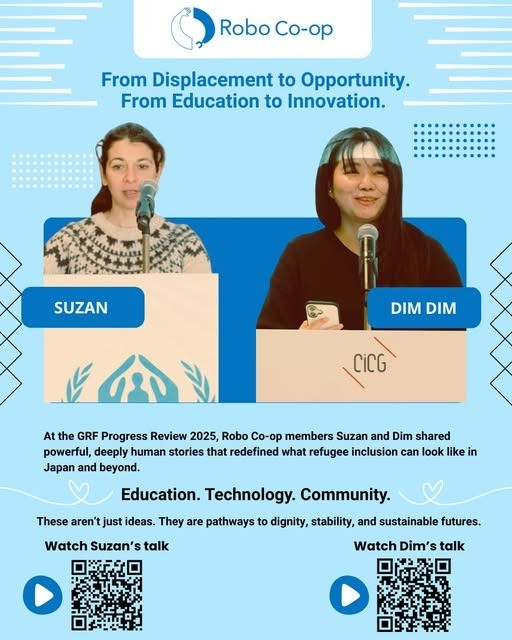
At the GRF Progress Review 2025, our Robo Co-op members Suzan and Dim shared powerful insights on refugee displacement, education, and community-driven integration in Japan, showing how education, technology, and cooperative models can create sustainable pathways for refugee inclusion.
◆Title of the Intervention: Skilled-based Pathways for Refugee Youth: Lessons from Japan and Beyond
In this session, Suzan shared her personal experience in Syria and her journey to Japan as a student from a refugee background, reflecting on how education served as her initial point of access to protection, stability, and long-term integration. She then introduced her research and published article on complementary pathways, with a particular focus on education-based pathways, explaining how these mechanisms can operate as structured, rights-based alternatives alongside traditional resettlement. Drawing on the Japanese context, she examined how educational access is implemented through initiatives such as Pathways Japan, highlighting the program’s role in supporting refugee-background students through scholarships, academic guidance, and institutional partnerships. She concluded by broadening the discussion from education to employment, introducing Robo Co-op as a digital platform that facilitates access to work through skills development, digital training, remote employment, and cooperative models, illustrating how education and employment pathways together can offer sustainable and dignified solutions for refugees.
Watch Suzan’s here
◆Title of the Intervention: “From Displacement to Innovation: A Personal Journey Through the Asia-Pacific Refugee Crisis and Community-Driven Integration in Japan”
This intervention traces Ms. Dim Dim Lian’s lived experience of displacement and situates it within the broader dynamics of the Asia-Pacific refugee crisis. She examines the challenges and opportunities encountered during her resettlement in Japan and explains how these experiences shaped her engagement with Robo Co-op. The presentation highlights how Robo Co-op’s community-based, technology-enabled initiatives support refugee empowerment, skills development, and long-term socio-economic inclusion.
Watch Dim's here